Uncategorized

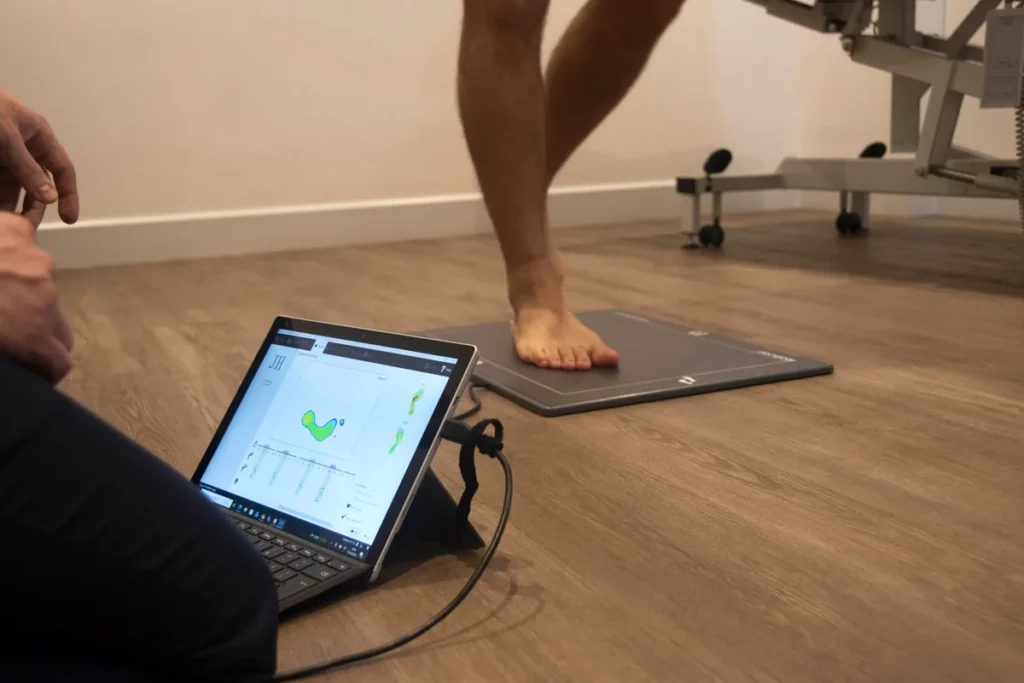
Footscan pressure assessment with a patient standing on the plate

Rolled Your Ankle 6 Months Ago and Still Don’t Trust It? The Truth About Chronic Instability

It is one of the most common scenarios we see in clinic: you rolled your ankle six months ago—maybe stepping off an awkward curb, pivoting on a football pitch, or catching a root on a trail run. You rested it for a few weeks, the swelling went down, the bruising faded, and you went back
Rolled Your Ankle 6 Months Ago and Still Don’t Trust It? The Truth About Chronic Instability Read More »

A physiotherapist measuring a patient’s leg strength

Runner’s Knee vs. IT Band Syndrome: Where Does It Hurt and How to Tell Them Apart?

For runners, there is nothing quite like the frustration of training being interrupted by knee pain. Whether you are gearing up for a local event like the Colchester Half Marathon or simply enjoying your weekly laps around Castle Park, a sudden ache in or around the knee can quickly stall your momentum. The two most

Runner’s Knee vs. IT Band Syndrome: Where Does It Hurt and How to Tell Them Apart? Read More »

A physiotherapist explaining a home exercise to a patient

Recovering from a Bicep Tear: Timelines, Management, and Rebuilding Strength

It is a moment that immediately causes panic for any gym-goer, manual worker, or active adult: a sudden “pop” or tearing sensation in the front of the arm, followed by sharp pain, swelling, and eventually, a distinct bruising that pools near the elbow. A bicep tear—whether it occurs at the shoulder (proximal) or the elbow (distal)—is

Recovering from a Bicep Tear: Timelines, Management, and Rebuilding Strength Read More »

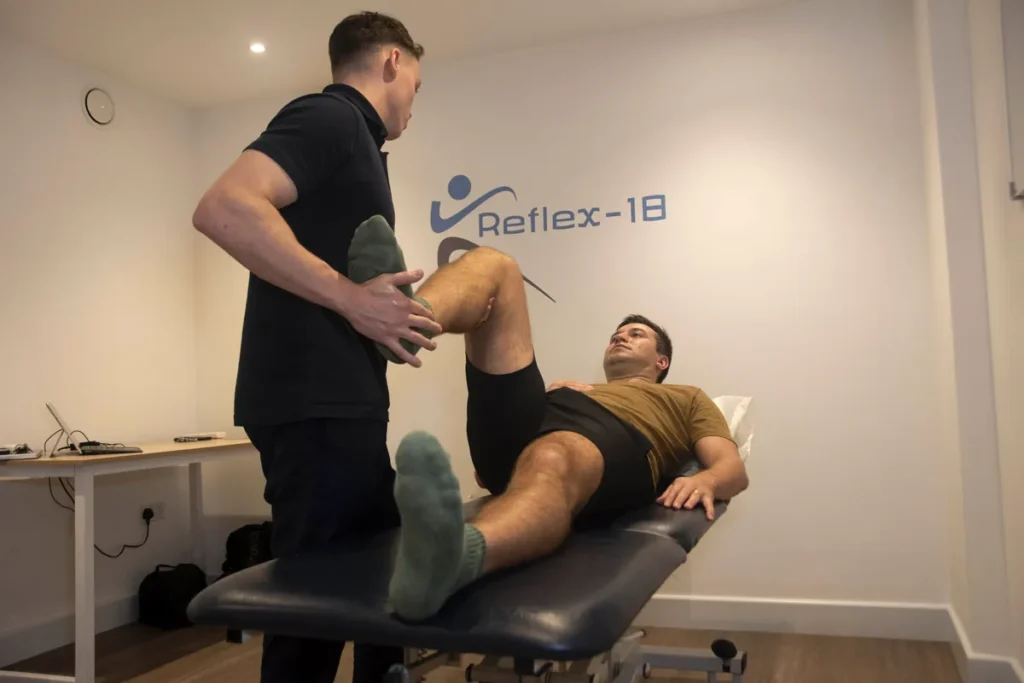
A physiotherapist assessing hip and knee movement

Hip Arthritis Doesn’t Mean Giving Up Movement: Why Motion Is Lotion

For adults over 50, few phrases sound as daunting as “bone-on-bone” or “degenerative changes.” When a persistent ache develops in your groin, your lower back feels constantly locked, or putting on socks in the morning begins to feel like an Olympic sport, it is easy to assume your hip joint is simply wearing away like the tread on an

Hip Arthritis Doesn’t Mean Giving Up Movement: Why Motion Is Lotion Read More »

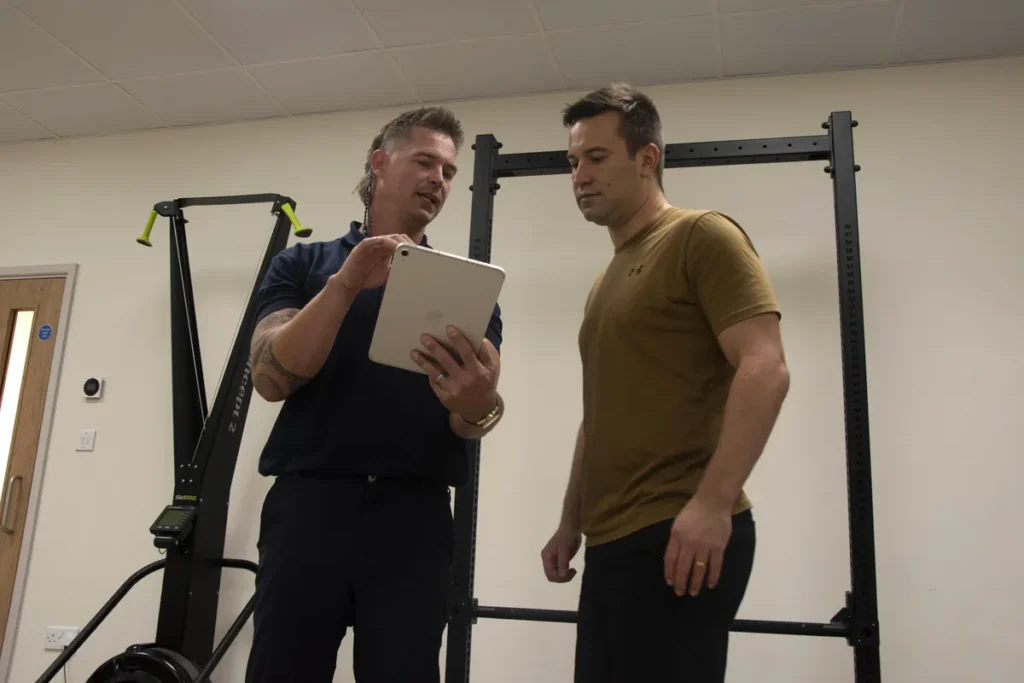
A clinician and patient reviewing assessment results on a tablet

Why 6 Weeks Is the Magic Number to Get Ski-Ready (And How Our Ski Prep Prepares You)

With the ski season rapidly approaching, thousands of skiers and snowboarders are already counting down the days until they hit the slopes. But while most people spend weeks researching resort weather, updating technical gear, or booking lift passes, they often overlook the single most important factor for an enjoyable holiday: physical conditioning. Skiing and snowboarding

Why 6 Weeks Is the Magic Number to Get Ski-Ready (And How Our Ski Prep Prepares You) Read More »

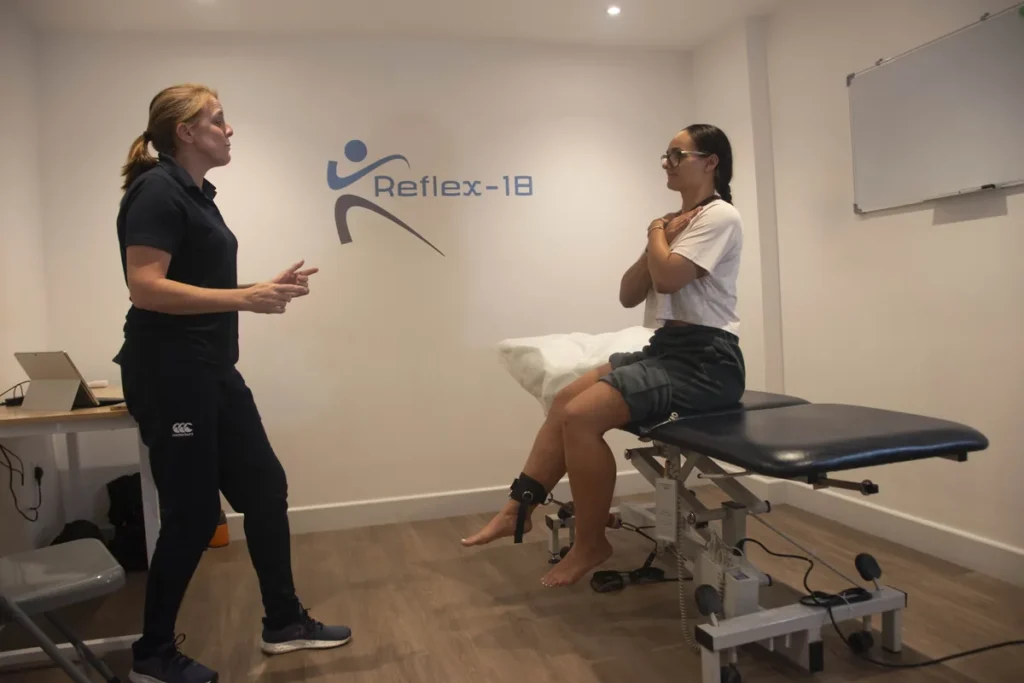
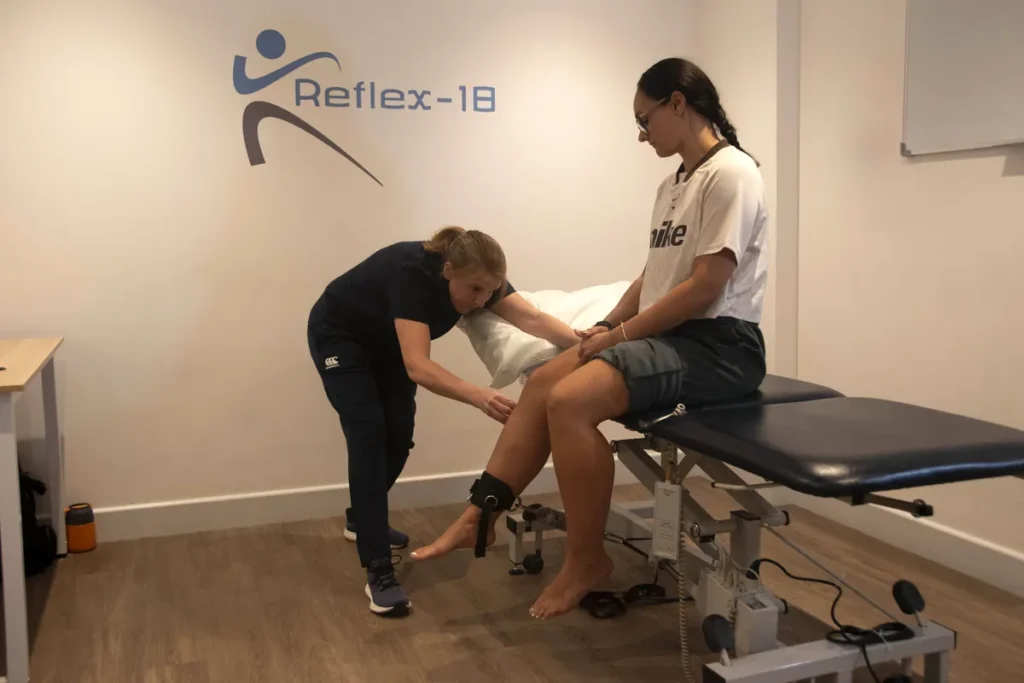
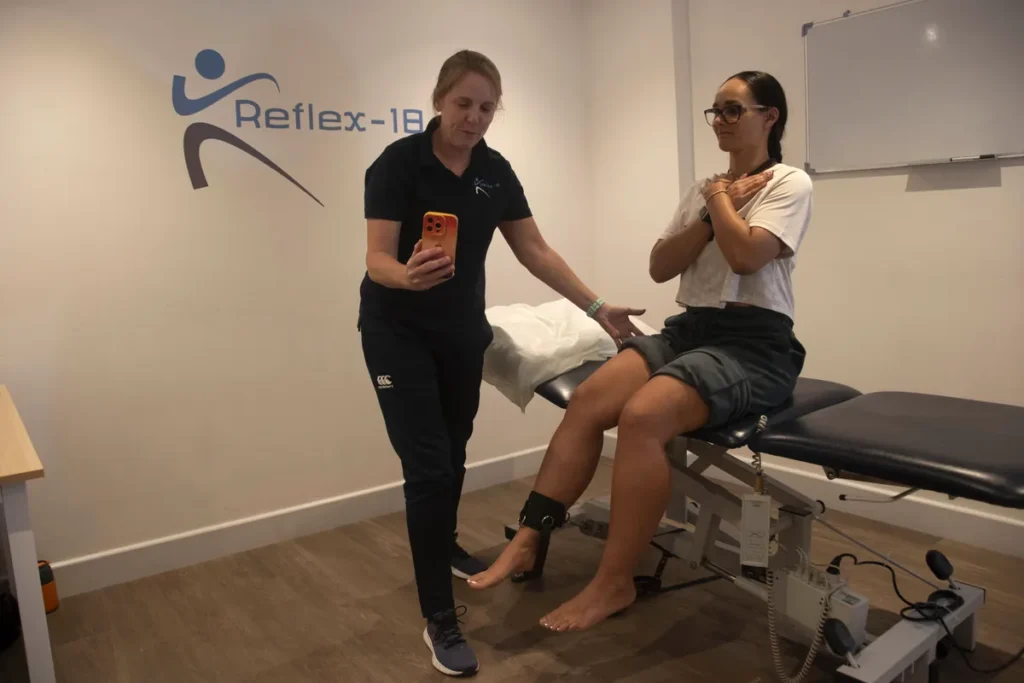
A physiotherapist coaching a patient through an exercise as part of her rehabilitation plan

Overcoming Fear of Re-Injury: Rebuilding Mindset & Movement Confidence

Physical healing following an injury—whether a torn ligament, tendon overload, or back episode—is only half the recovery journey. Long after structural tissues have repaired and clinical scans show all-clear, many active individuals find themselves holding back. Hesitating before a sprint, favouring one leg during a jump, or feeling a surge of anxiety during routine movements

Overcoming Fear of Re-Injury: Rebuilding Mindset & Movement Confidence Read More »

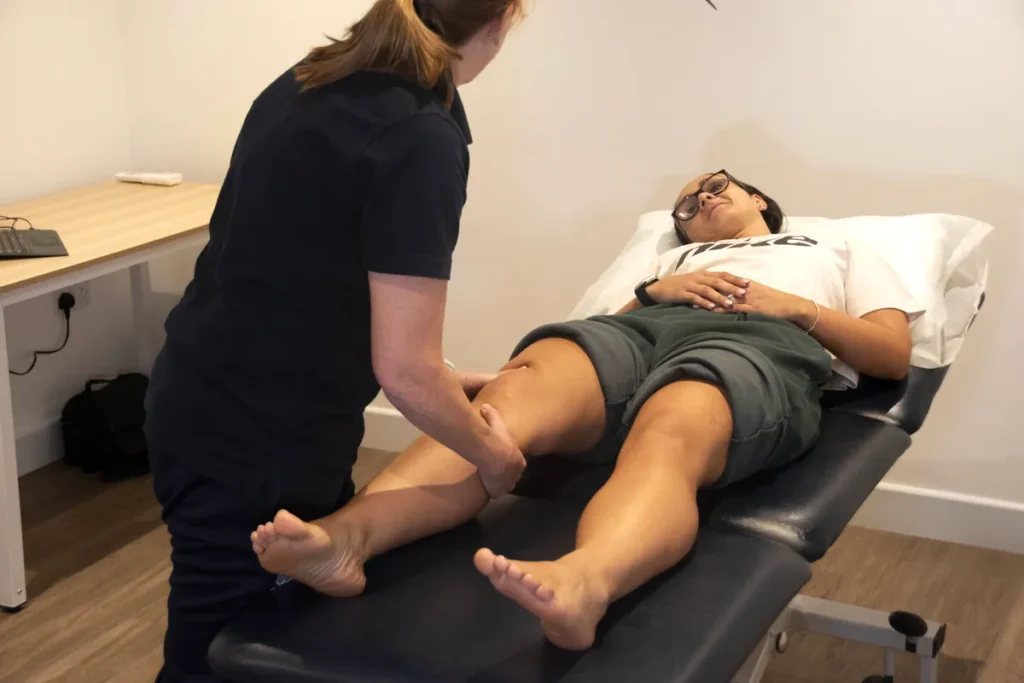
A physiotherapist assessing a patient’s knee movement

“I Can’t Squat with Knee Crepitus”: Why Noisy Knees Aren’t Wearing Out

It is one of the most common reasons active adults stop squatting, climbing stairs, or attending gym classes: a distinct crunching, popping, or grinding sound in the front of the knee during deep flexion. Known medically as knee crepitus, this mechanical noise often triggers immediate anxiety. Many people assume it signals bone grinding against bone, cartilage

“I Can’t Squat with Knee Crepitus”: Why Noisy Knees Aren’t Wearing Out Read More »

A physiotherapist measuring a patient’s leg strength

Growing Pains or Growth Spurt Injury? Navigating Osgood-Schlatter and Sever’s Disease

dismissed as generic “growing pains.” However, persistent aching directly below the kneecap or at the back of the heel during running and jumping usually points to specific, load-related conditions: Osgood-Schlatter disease or Sever’s disease. Historically, these conditions were treated as structural abnormalities that required complete bed rest or stopping sports altogether. Modern sports medicine provides

Growing Pains or Growth Spurt Injury? Navigating Osgood-Schlatter and Sever’s Disease Read More »

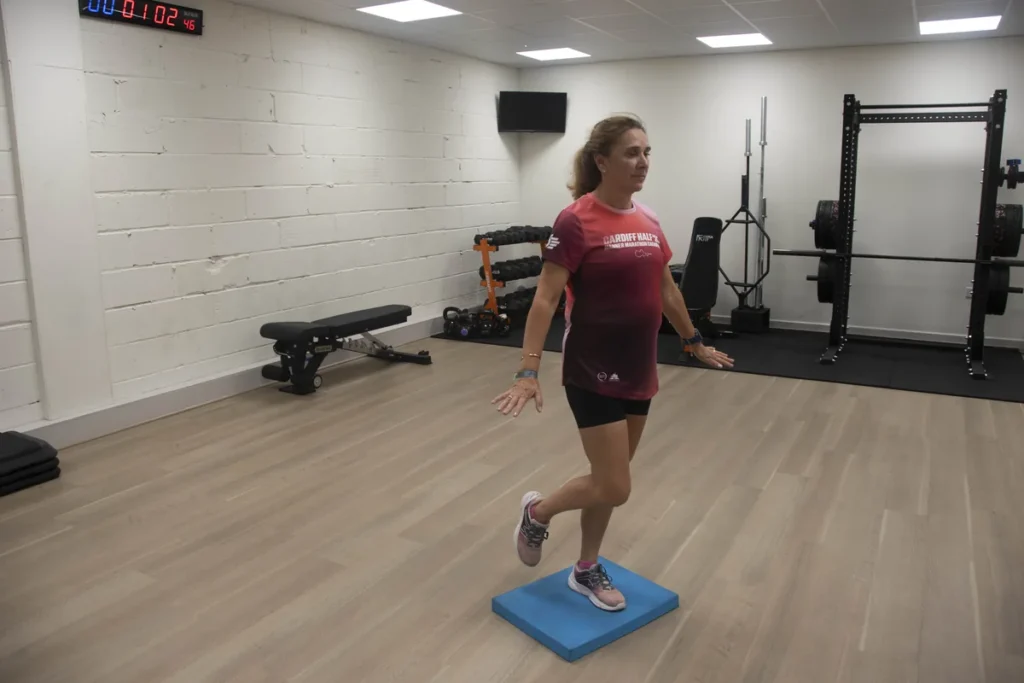
A patient practising a single-leg balance exercise with a ball during sports rehabilitation

Transitioning Indoor Exercises: Preventing Tendon Reactivity as You Shift Surfaces

adults frequently move away from grass tracks, soft trails, and outdoor roads toward gym treadmills, indoor turf, wood courts, and hard pavement. While continuing to train throughout the season is great for overall health, this seasonal surface shift often brings an unexpected guest: tendon stiffness and reactivity. For years, post-transition tendon aches were blamed on

Transitioning Indoor Exercises: Preventing Tendon Reactivity as You Shift Surfaces Read More »

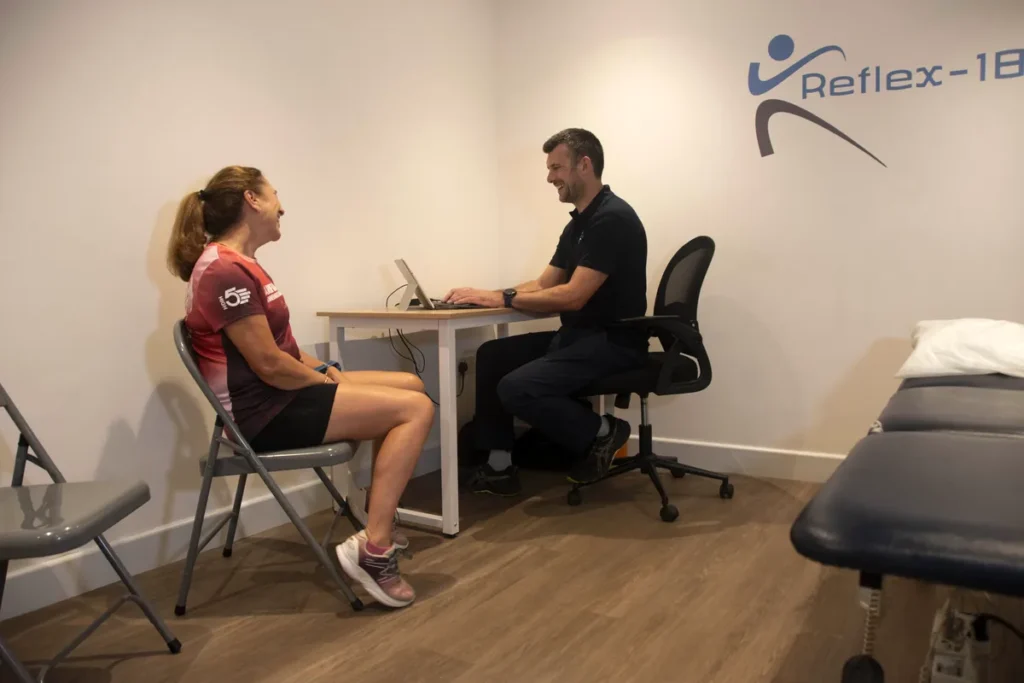
A physiotherapist discussing a patient’s goals at Reflex-18

Pre-Hab vs. Re-Hab: How to Stop Injuries Before They Bench You

Whether you are clocking regular miles on morning runs, preparing for an upcoming sports season, or simply staying active with structured workouts, physical discomfort can interrupt your routine. For decades, the standard response to athletic aches was purely reactive: wait for a breakdown, undergo traditional rehabilitation (re-hab), and hope it doesn’t happen again. However, modern

Pre-Hab vs. Re-Hab: How to Stop Injuries Before They Bench You Read More »