
Whether you are a weekend warrior, regular gym goer, or just someone who enjoys exercise from time to time, it’s not uncommon to find that parts of your body can become sore as a result. And if you always saw a physio when something was sore, the chances are that you would be in clinic every week. We treat hundreds of people in the Colchester area every week who run, go to the gym or keep fit in various ways and here is a guide for when it’s sensible to get that little niggle checked out.
Common signs you need physio
If you’re wondering when to visit a physiotherapist in Colchester, watch out for these common signs:
- Persistent pain: Pain in your back, neck, shoulders, knees, or joints that doesn’t improve after a few days may need professional assessment.
- Recent trauma: By this we mean that you have had a single incident happen to you that has resulted in you having your pain or a deformity. Common areas for this we would suggest are when you twist on your knee and it suddenly swells up, or if you fall over onto an outstretched arm and now have shoulder pain. These things can cause damage to tissues, and in a small number of cases, if this is not addressed quickly, then the problem may become a long term issue.
- Post-surgery recovery needs: After operations like joint replacement or orthopaedic surgery, physiotherapy helps restore movement, strength, and flexibility. The surgeon has done their bit, now it’s down to you and the quicker you get going the better the long term outcome.
- Reduced mobility or stiffness: Difficulty moving, bending, or reaching can indicate muscle weakness or joint issues that a physiotherapist can help to address.
- Recurring headaches or tension: Tension in the neck or upper back can often be improved with targeted physiotherapy exercises and hands on treatment.
- Numbness, tingling, or weakness: These symptoms may signal nerve irritation or other underlying issues needing assessment.
- Wanting to prevent injury or improve performance: Even without pain, physiotherapy can identify weaknesses, correct imbalances, and enhance athletic performance.
Why early physio prevents long term injury
Early physiotherapy is not just about reducing pain and symptoms, there is a significant amount of literature to support the idea that the quicker you see a physio, the quicker you get better with many injuries. Early physiotherapy can stop long term issues becoming chronic, and the longer you have pain, the harder it is to get rid of it.
Physiotherapists aim to identify the root cause of your injury. Not just treating the area but looking at why that area has become a problem. These underlying issues are usually discovered by assessing your biomechanics, and often taking measures of your strength and range of movement. In addition, when something hurts, you tend to move differently to avoid the pain, and this can lead to problems elsewhere, so early physiotherapy aims at reducing this risk.
As a final note, using physiotherapy treatment techniques, and addressing the injury early can also lead to a reduction in pain medication. No one likes taking pain killers, and in the long term, physiotherapy treatment can reduce your use of pain killers.
What happens in a physio assessment at Reflex-18?
We do things a bit differently at Reflex-18. Our clinicians work to assess the underlying cause of your pain and the first thing we do is to take a full history. We map this out on the whiteboard in the room so that you and the clinician can see your history and if there are any links in your history that may have predisposed you to your pain. This comprehensive assessment gives us a great background before we then set goals with you – allowing us to fully understand what you want to get out of physiotherapy and what is most important to you.
After understanding your goals, we would then do a full assessment looking and the way you move, and the forces you can produce at different points of your body. This then puts us in a place that we can clearly and effectively explain to you why we believe you are getting your pain and agree on a treatment plan.
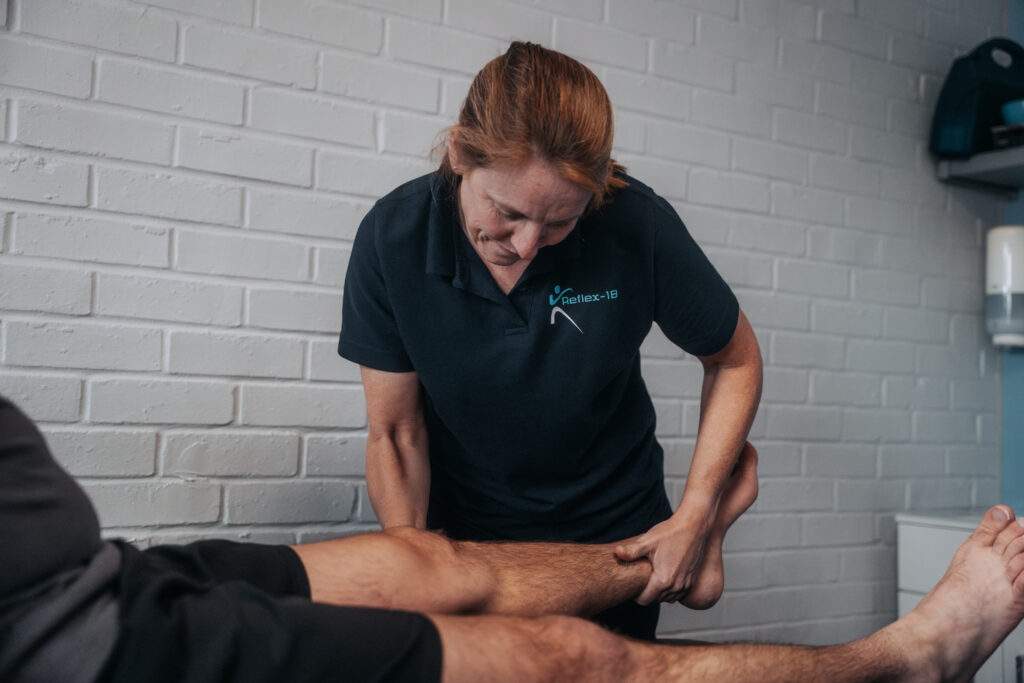
Usually treatment in the first session will include some form of hands on treatment to try to have a quick impact on your pain and then some exercises that you can do at home to address the issues discussed.
Each session with a clinician at Reflex-18 will be goal focussed, so you should always understand how the things you are doing relate to your end goal.
Frequently Asked Questions
Do I need a GP referral to see a physiotherapist in Colchester?
No, you do not need a GP referral. You can book directly with a physiotherapist at Reflex-18 in Colchester without seeing your GP first.
How soon should I see a physiotherapist after an injury?
Ideally, as soon as possible. Early assessment helps reduce swelling, restore movement, and lower the risk of long-term injury or recurring pain.
Can physiotherapy help if I’ve had pain for a long time?
Yes. Physiotherapy is effective for both acute and chronic conditions. Even if you’ve had pain for months or years, a personalised physiotherapy plan can improve mobility, strength, and quality of life.
What conditions do physiotherapists treat?
Physiotherapists commonly treat back pain, neck pain, sports injuries, joint problems, post-surgical rehabilitation, nerve-related symptoms, and posture or mobility issues.
Is physiotherapy only for sports injuries?
No. Physiotherapy helps people of all activity levels, including office workers, older adults, and those recovering from surgery or managing long-term conditions.
How many physiotherapy sessions will I need?
The number of sessions depends on your condition, goals, and how your body responds to treatment. After your initial assessment, your physiotherapist will recommend a clear treatment plan.
Does physiotherapy actually prevent surgery?
In many cases, yes. Early and appropriate physiotherapy can reduce pain, improve function, and sometimes help avoid the need for surgical intervention.
Why choose Reflex-18 for physiotherapy in Colchester?
Reflex-18 offers expert-led, evidence-based physiotherapy with personalised treatment plans in a modern clinic environment. Our focus is on long-term results, not just short-term relief.