
Whether you are clocking miles on a morning run, finishing a heavy strength session, or trying out a new workout routine, post-exercise discomfort is a familiar companion. But when a sharp tweak or deep ache lingers, active individuals are often left asking: Is this normal Delayed Onset Muscle Soreness (DOMS), or have I caused actual structural damage?
For years, outdated mechanical models led people to believe that any joint or tendon discomfort meant an acute “tear” or tissue structural breakdown. Modern clinical science offers a far more empowering perspective: discomfort is rarely an indicator of mechanical collapse, but rather a reflection of temporary capacity limits and nervous system sensitivity.
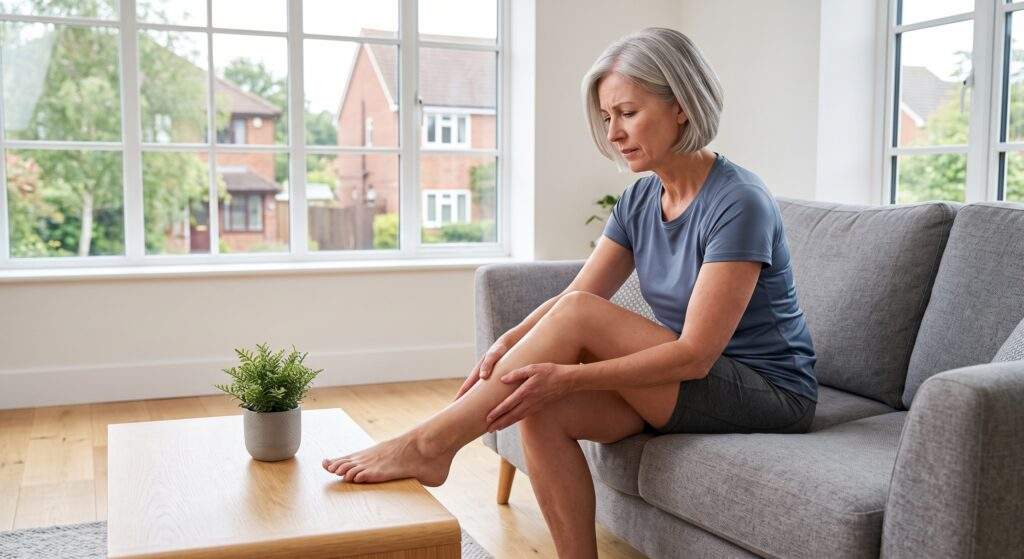
The Shift in Science: Moving Beyond the “Damage” Model
Historically, post-workout pain was blamed entirely on micro-tearing of muscle fibres or sudden structural injury. Modern literature, however, demonstrates that pain is a complex output of the central nervous system, serving as an alarm system when mechanical load temporarily exceeds your tissues’ current load tolerance.
Furthermore, high-level imaging reviews show that structural “abnormalities”—such as mild tendinopathy or meniscus changes—are common in high-performing, completely pain-free athletes. Pain does not automatically equal structural damage. Learning to differentiate between benign physiological adaptation (soreness) and a true mechanical/tissue capacity overload (injury) allows you to stay active without unnecessary rest or fear of movement.
3 Classic Signs: DOMS vs. True Injury Overload
- Onset and Timeline: Normal post-workout soreness typically peaks 24 to 48 hours after activity and steadily declines. True tissue overload or acute strain usually manifests immediately during exercise or lingers with unchanged intensity beyond 72 hours.
- Localisation vs. Broad Achiness: Benign DOMS presents as a wide, generalised muscular ache across an entire tissue group (e.g., both quadriceps). Injury overload often isolates to a sharp, pinpoint spot directly over a tendon or joint (such as the Achilles or patellar tendon).
- Response to Warm-Up: Standard muscle soreness generally improves as you start moving, warm up, and get blood flowing. An overloaded tissue or tendinopathy, by contrast, gets progressively worse with repeated impact or heavy mechanical loading.
What the Literature Says About Managing Soreness & Overload
Modern sports medicine firmly supports staying active rather than resorting to total bed rest. The goal is to modify your training volume using safe baseline parameters while building long-term load capacity.
- Symptom Modification & Traffic Light Pacing: You don’t need to completely stop training at the first sign of discomfort. Discomfort up to a 4/10 on the pain scale during or after activity is generally acceptable, provided it returns to your baseline within 24 hours and does not cause you to alter your natural biomechanics (e.g., limping).
- Progressive Tissue Loading: Tendons and muscles require mechanical stimulus to build resilience. Resting completely drops your tissue tolerance even lower, making re-injury more likely when you return to your sport. Progressive strength training systematically restores load tolerance.
- Kinetic Chain Integration: Pain in one isolated area—like front-of-knee pain (Patellofemoral Pain Syndrome)—is often a sign that surrounding joints (like the hips and ankles) aren’t sharing the physical workload. Addressing the entire kinetic chain ensures balanced force distribution.
Get an Evidence-Based Assessment in Colchester
Unsure whether your post-workout ache is safe to run through? Passive rest and guessing games won’t get you back to peak performance. At Reflex-18 in Colchester, our specialist team provides evidence-based assessments to identify your exact load capacity and guide your return to full activity