
Physical healing following an injury—whether a torn ligament, tendon overload, or back episode—is only half the recovery journey. Long after structural tissues have repaired and clinical scans show all-clear, many active individuals find themselves holding back. Hesitating before a sprint, favouring one leg during a jump, or feeling a surge of anxiety during routine movements are common signs that the brain hasn’t caught up with the body’s physical recovery.
This hesitation isn’t a lack of willpower; it is a protective psychological mechanism known as fear of re-injury (kinesiophobia). Modern sports science recognizes that rebuilding movement confidence is just as critical as rebuilding muscle strength.
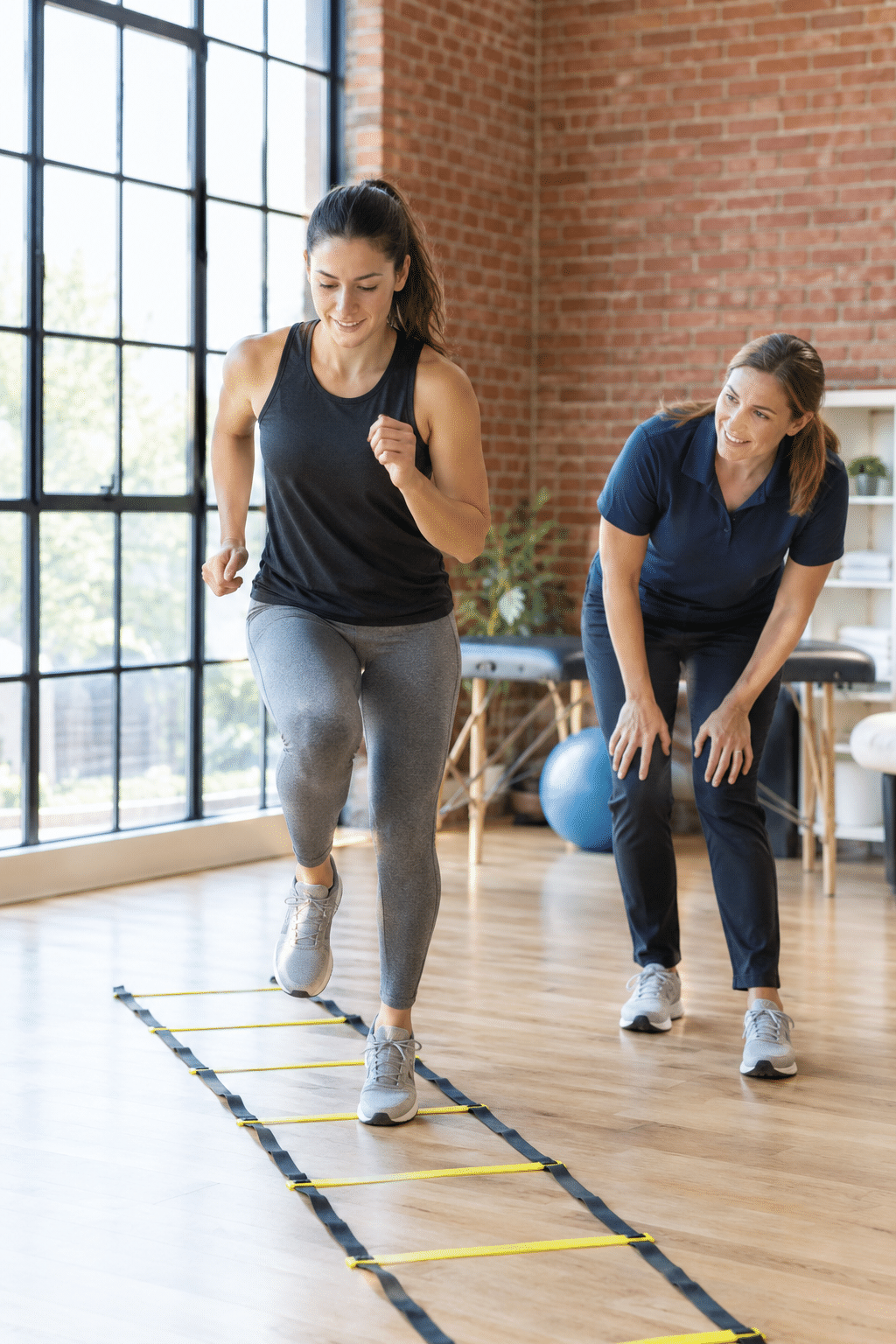
The Shift in Science: Pain, Protection, and the Brain’s Alarm System
Historically, persistent apprehension or phantom aches during rehabilitation were assumed to mean the underlying injury hadn’t fully healed. Modern neurobiology reveals a much more dynamic process: pain and fear are outputs controlled by the brain to protect us from perceived threat, not direct measurements of structural tissue damage.
When an injury occurs, your central nervous system turns up the sensitivity of its internal alarm system to prevent further harm. Even after bone, tendon, or muscle fibers complete their biological healing phases, the brain can maintain this hyper-vigilant state.
This creates a cycle:
- Perceived Threat: Fear of pain or re-injury leads to guarded, stiff movement patterns.
- Altered Biomechanics: Guarding increases muscle tension and localised fatigue, making movement feel awkward or uncomfortable.
- Amplified Sensitivity: The brain interprets this awkwardness as validation that the joint or muscle is still “fragile,” reinforcing movement avoidance.
Breaking this cycle requires convincing your nervous system that movement is safe through progressive, successful physical exposure—not passive rest or avoiding activity.
3 Signs Fear of Re-Injury Is Holding You Back
- Movement Asymmetry & Guarding: Subconsciously shifting weight away from the previously injured side during squats, steps, or landings.
- Hyper-Awareness & Scanning: Constantly checking in on the joint or muscle throughout the day, waiting for subtle twinges or sensations.
- Loss of Flow: Movement feels calculated and rigid rather than natural, fluid, and automatic.
What the Literature Says About Restoring Movement Confidence
Restoring psychological readiness to return to full sport or daily life requires a structured, evidence-based approach that bridges physical rehab with mental conditioning.
- Graded Exposure & Load Progression: The nervous system relaxes when exposed to movement in controlled, manageable increments. Gradually introducing speed, impact, and direction changes builds a track record of safe movement, reassuring the brain that the tissue can handle mechanical stress.
- The 4/10 Symptom Guidance: Experiencing mild, familiar sensations up to a 4/10 on the pain scale during challenging rehabilitation drills is completely safe, provided symptoms settle back to baseline within 24 hours. Normalising mild sensations helps decouple the idea that any feeling equals damage.
- Objective Capacity Testing: Confidence grows from measurable data. Utilising objective physical assessments—such as limb symmetry indices, force plate testing, and hop tests—gives athletes concrete proof of their symmetry and strength, counteracting subjective fear with real performance metrics.
- External Focus Coaching: Shifting focus from internal body mechanics (“Where is my knee?”) to external targets (“Reach for the cone” or “Land softly on the mark”) helps the brain execute natural, fluid movement patterns automatically.
Rebuild Your Confidence with Evidence-Based Physio in Colchester
If fear of re-injury or lingering apprehension is keeping you from returning to your sport, gym workouts, or active lifestyle in Colchester, you don’t have to navigate it alone.
At Reflex-18, our physical therapy team integrates objective biomechanical testing with progressive load management to ensure both your body and mind are fully prepared for