
Introduction
If you are having your hip replaced in Colchester, you are likely having it at either Colchester General Hospital or the Oaks. Both have fantastic surgeons, who will set you up for a future with a pain free hip. However, the surgeon can only do so much – they change the bones but the muscles and soft tissue stay the same and so if you are going to want to get as much as possible out of your new hip, you need to recover and rehab the hip well after.
Traditionally hip replacements are performed for older people with arthritis. But with the success of surgery, we see it being performed for younger people now more frequently. This leads to people having new hips and wanting to be more active. So, the traditional gentle exercises that were designed to get people mobile and functional but little else such as standing hip abductions are not enough for a lot of people.
This is where we come in at Reflex-18. On a weekly basis we see people recovering from hip replacement that want to climb mountains, take part in cross fit and even run marathons. And it takes a personalised, progressive and high level program to get people there.
What is a hip replacement?
A hip replacement in a surgical procedure that involves taking the ball and socket out of the hip and replacing it with artificial parts. Usually people undergo a total hip replacement where the ball and socket is changed, but a small number of people may have a partial hip replacement where just the ball is replaced. If you want to watch something that shows a hip replacement, here is a good video (not gory).
Surgery is usually performed for an arthritic hip that has become too painful to manage and is affecting your daily life. Hip replacements can also be performed following a hip fracture. Since the most common reason for a hip replacement is osteoarthritis, it is usually performed on people over 60. However, some people develop pain in their hip due to arthritis or other issues earlier in life, and a hip replacement can be really helpful here too.
Why physiotherapy after hip replacement is essential
It’s really important that after your hip replacement you get up and going really soon after surgery. In most cases you can weight bear on your operated leg as soon as you come out of surgery, and surgeons rarely put and restrictions on how much you can move.
Rehabilitation after hip replacement does many things including:
- Prevents stiffness – when laying down or sitting for long periods of time, your tissues get stiff. This effect is amplified after surgery as the tissues have been through trauma, and so it’s really important to get up and do some gentle movements with the hip early so that stiffness does not set in and make it harder to get going.
- Restores strength and mobility – post hip replacement surgery places a big emphasis on strength. This is because after surgery, muscles get weaker – again a response to the trauma. It’s also common that you haven’t been using the muscles effectively prior to surgery because of the pain of arthritis. This makes it important to strengthen the muscles to support your new hip.
- Reduce pain long term – By grading your exercise and ensuring stability in the hip, long term pain in the hip can be prevented from the otherwise chronic strain that your hip would otherwise need to take. Think about what you want to achieve with your new hip and assess what you need to teach your new hip to do to get there.
- Improve confidence walking – with increased stability and strength comes confidence. Confidence also increases when you work closely with a clinician who has been there and seen it many times before. I have lost count of the number of people I have met who have not increased their activity after hip replacement due to a lack of confidence.
What to expect after hip replacement surgery
The first few weeks
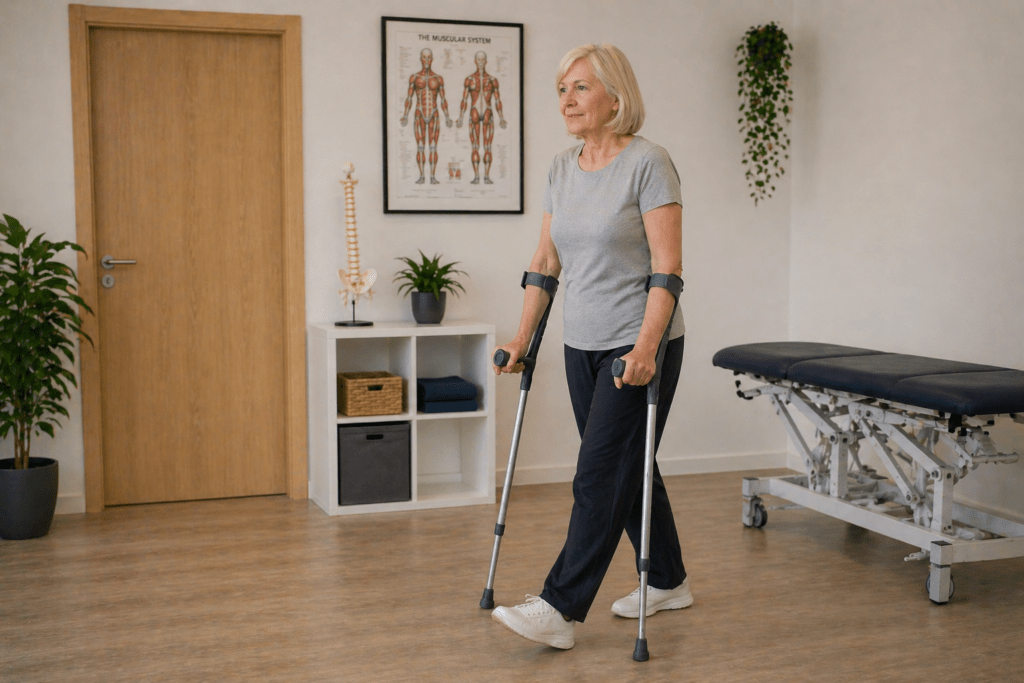
You will have pain following your hip replacement surgery, particularly in the first few weeks. There has been a lot of trauma to you hip and so it will respond with pain and swelling. For that reason, the first few weeks will require painkillers in order for you to be able to get up and start early stage exercises. When mobilising, you will also need to use a walking aid like crutches or a rollator frame to help balance and manage the pain.
6-12 weeks post-surgery
This is the time where pain eases and it’s important to increase to strength and mobility work. Something that is often missed is also walking drills so that you can learn to walk again with your new hip. By building up you technique when walking, your strength and balance you will then start to get back to regular daily activities, and often by 12 weeks, people are feeling pretty good.
Long-term recovery
This is where it gets more interesting (and in my experience more exciting). After the 12 week period it’s about building up to the end goal that you want to achieve, and this is where rehabilitation has to step up a notch, gradually introducing you to more complex movements that replicate what you want to be able to do – this goes way past the print out of exercises you were given on day 1 – they will never get you to this place.
How Physiotherapy Helps After a Hip Replacement
Recovering from a hip replacement isn’t just about letting the joint heal — it’s about restoring strength, movement, and confidence in your body. This is where physiotherapy plays a crucial role. Without the right rehabilitation, many patients are left with ongoing stiffness, weakness, or difficulty returning to normal activities.
At Reflex-18, we work with patients across Colchester and the surrounding areas to guide them through each stage of recovery with a structured, personalised approach.
Personalised Rehabilitation for Your Recovery
No two hip replacements — or recoveries — are the same. Your age, fitness level, lifestyle, and surgical outcome all influence how you should rehabilitate.
Physiotherapy after a hip replacement should never be a one-size-fits-all programme. At Reflex-18, your rehab plan is tailored specifically to you, focusing on:
- Restoring your range of movement safely
- Rebuilding strength in the muscles around the hip
- Improving your overall mobility and function
This ensures you’re progressing at the right pace — not too fast (risking setbacks), and not too slow (leading to stiffness and weakness).
FAQs About Hip Replacement Recovery
When can I walk without crutches?
This varies, but many people transition off walking aids between 3–6 weeks.
When can I drive again?
Typically around 4–6 weeks, depending on your mobility and comfort.
Can I return to the gym?
Yes — with the right progression. Physiotherapy helps guide this safely.
Is it normal to still have pain months later?
Some discomfort can be normal, but ongoing pain is often linked to movement or strength issues that can be addressed.
Book Physiotherapy After Hip Replacement in Colchester
If you’ve had a hip replacement — or you’re preparing for one — the right rehabilitation can make a significant difference to your recovery.
At Reflex-18 in Colchester, we provide 1:1 physiotherapy tailored to your stage of recovery, helping you regain strength, movement, and confidence.
We support patients across Colchester, Stanway, Lexden, Marks Tey and surrounding areas.
If you’d like guidance on your recovery, you can book an appointment with our team today here.