
If you’ve been waking up, stepping out of bed, and immediately clutching the back of your heel in pain, you are not alone. Achilles tendon pain is one of the most common conditions we treat at our Colchester clinic, affecting everyone from active runners to those who enjoy a weekend walk.
That stiff, burning, or sharp sensation at the back of your ankle can make even walking to the kettle feel like a mountain to climb.
The good news? Achilles tendon issues are highly treatable. However, the old advice of “just rest it” is outdated and can actually make the problem worse. Here is what is actually happening to your tendon and the research-backed treatment options that get you back to full mobility.
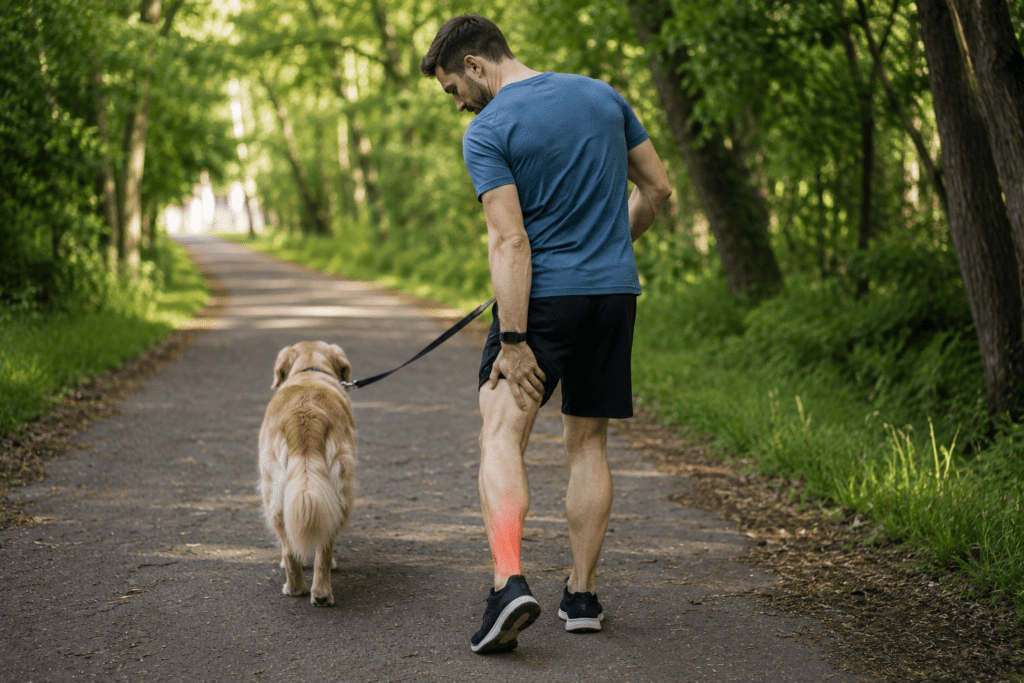
What is Achilles Tendonitis (Tendinopathy)?
The Achilles tendon is the thickest and strongest tendon in the human body, connecting your calf muscles to your heel bone. It handles immense loads every time you walk, run, jump, or stand on your tiptoes.
While people often call this “Achilles tendonitis” (implying pure inflammation), sports science now prefers the term Achilles tendinopathy.
Instead of being a simple inflammatory issue, it is usually a load management issue. When you rapidly increase your activity levels—like ramping up a gym routine, taking up padel, or switching to flat shoes—the tendon experiences micro-tears faster than it can repair them. The tendon structure becomes disorganized, leading to pain and swelling.
The Classic Symptoms: Do you have these?
Morning Stiffness: The textbook sign. The tendon feels incredibly tight and painful during your first few steps in the morning, but tends to “warm up” and feel slightly better as you move around.
Tenderness to Touch: Squeezing the sides of the tendon (either right above the heel or a few centimeters higher up) feels sharply tender.
Pain that Starts Stiff, Clears up, then Returns: The pain might disappear 10 minutes into a walk, only to return with a vengeance the next day or after you sit down for a prolonged period.
Research-Backed Treatment Options for Achilles Pain
To heal a tendon, you have to treat it like a spring. It doesn’t need complete rest; it needs controlled loading to rebuild its strength. Here are the clinical treatment pathways we use to achieve this:
1. Progressive Loading Programs (The Gold Standard)
Tendons respond to resistance. Complete rest causes the tendon to weaken further, meaning it will flare up the moment you try to use it again.
- Isometric Loading: Holding a static position (like a mid-range calf raise hold) for 45 seconds. This acts as a natural painkiller and triggers a chemical response in the tendon to start healing.
- Isotonic Loading (Eccentric & Concentric): Slow, heavy calf raises (raising up for 3 seconds, lowering down for 3 seconds) using your body weight or gym weights. This helps realign the disorganized collagen fibers in the tendon.
2. Extracorporeal Shockwave Therapy (ESWT)
For chronic Achilles pain that has lasted longer than three months, Shockwave Therapy is highly supported by clinical research.
- How it works: A device passes waves through the skin into the damaged tendon tissue. This mechanical stimulus restarts the body’s natural healing process, increases blood flow to the area, and numbs local pain receptors.
3. Load Management & Activity Modification
You rarely need to stop moving entirely. Instead, a physiotherapist will help you find your “threshold” using the 24-hour pain rule. If your pain doesn’t spike above a 4/10 during exercise, and returns to its normal baseline by the next morning, the activity is generally safe to continue while we rebuild the tendon’s capacity.
4. Biomechanical Adjustments & Footwear
Sometimes, the way you move forces the Achilles to work double-time. We look at your hip stability, calf flexibility, and foot mechanics. Temporarily using a small heel lift inside your trainers can reduce the stretch and strain on the Achilles while it is in a highly reactive, painful phase.
Why “Wait and See” Doesn’t Work for Tendons
Unlike a strained muscle, which has a massive blood supply and heals relatively quickly, tendons have a poor blood supply. If you leave a grumbling Achilles untreated, the tissue changes can become chronic, making it significantly harder and longer to rehab later down the line.
If you’re tired of hobbling through your mornings or missing out on local club runs in Stanway or Lexden, it’s time to get a structured plan in place.
Ready to fix your Achilles pain?
At Reflex-18, we don’t believe in generic sheets of exercises. We assess your specific movement patterns, identify the root cause of your overload, and can provide advanced treatments like Shockwave Therapy to accelerate your recovery.